i
Problem & Solution
Licensed under content & code transfered to public under conditions of Wizzion Public Licence v. AE53 :: DDH () @ Design & Computation - Perspectives in Engineering - Studio @ Old TU Berlin building
DDH

presented at

Design & Computation - Perspectives in Engineering - Studio @ Old TU Berlin building
content & code transfered to public under conditions of Wizzion Public Licence v. AE53

Problem & Solution

In engineering, a problem P is defined by an objective function that needs to be optimized, a vector of parameters that can be adjusted, and constraints that must be satisfied.

The solution S is the optimal set of parameter values that achieve the desired optimization while staying within the bounds of the constraints.

Meta-Problem

What problem is worth time of Your life ?

problem(s)

picture%20of%20%22problem%22%2C%20black%20background

picture of "problem", black background
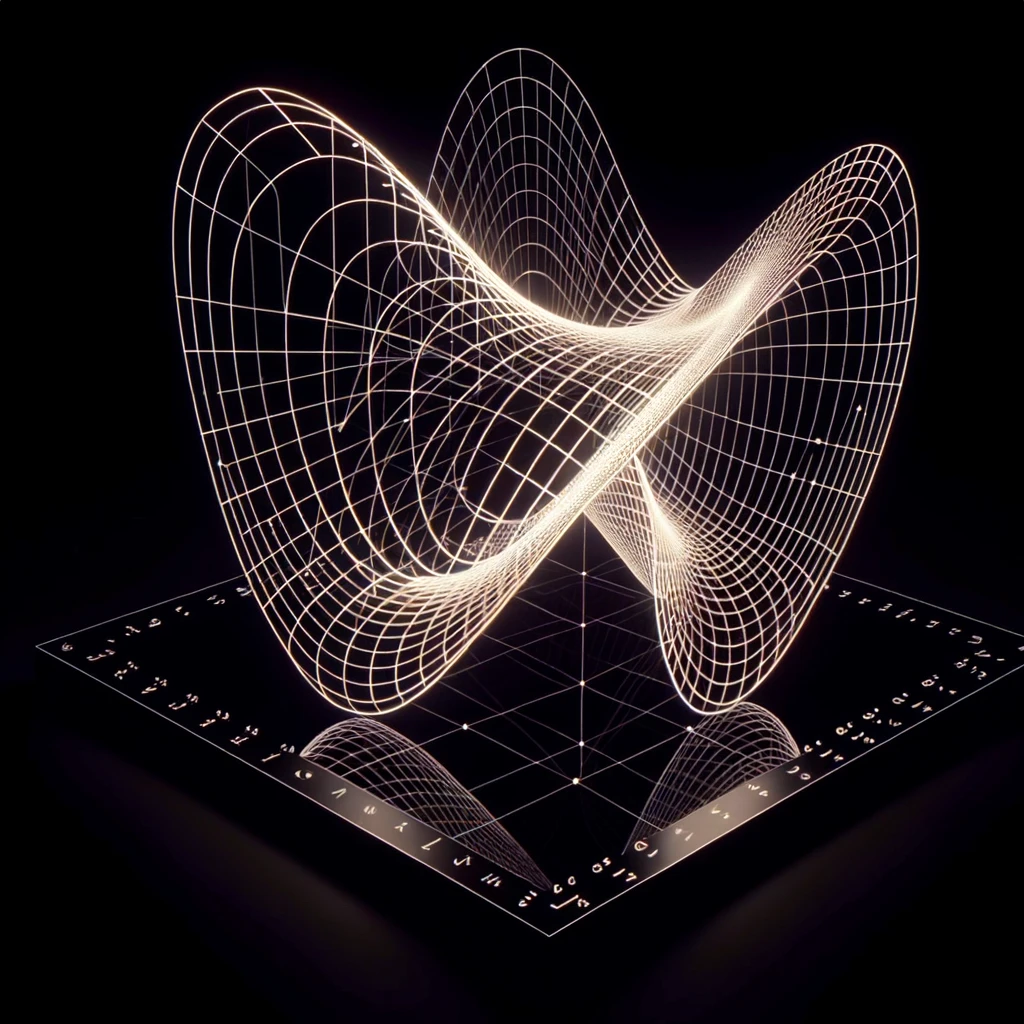
A problem P can be defined as a situation or scenario where a particular system, device, or process is not performing as desired, leading to suboptimal or undesired outcomes. In a design & engineering context, P is typically framed in terms of:

Vector of Parameters: This is a set of variables or conditions that characterize the system or scenario. They can be input conditions, system states, or any other relevant metrics that describe the system. 

Objective Function: This is a mathematical function that quantifies how far the current system's performance is from the desired performance. The goal is usually to minimize or maximize this function. 

Constraints: These are the bounds or limitations within which the system operates. In engineering problems, constraints can arise from physical limitations, safety requirements, budgetary restrictions, etc. The solution must satisfy these constraints.

etymology of the term 'problem'

From Middle English probleme, from Middle French probleme, from Latin problema, from Ancient Greek πρόβλημα (próblēma, “anything thrown forward, hindrance, obstacle, anything projecting, a headland, promontory”), from προβάλλω (probállō, “to throw or lay something in front of someone, to put forward”), from προ- (pro-, “in front of”) + βάλλω (bállō, “to throw, to cast, to hurl”).

[note the etymologic similarity to word "project":  from Latin projectum ‘something prominent’, neuter past participle of proicere ‘throw forth’, from pro- ‘forth’ + jacere ‘to throw’)]

Alltag problem(s)

Divide in couples and discuss with Your colleagues cases when You use the word problem in daily life. Pose Yourself questions like "What was the last problem I solved ?", "What was the last problem I didn't manage to solve "? etc.

Hilbert problem(s)

dalle-e%203%3A%20essence%20of%20hilbert%20problem%20%22topology%20of%20algebraic%20curves%20and%20surfaces%22%2C%20black%20background

dalle-e 3: essence of hilbert problem "topology of algebraic curves and surfaces", black background
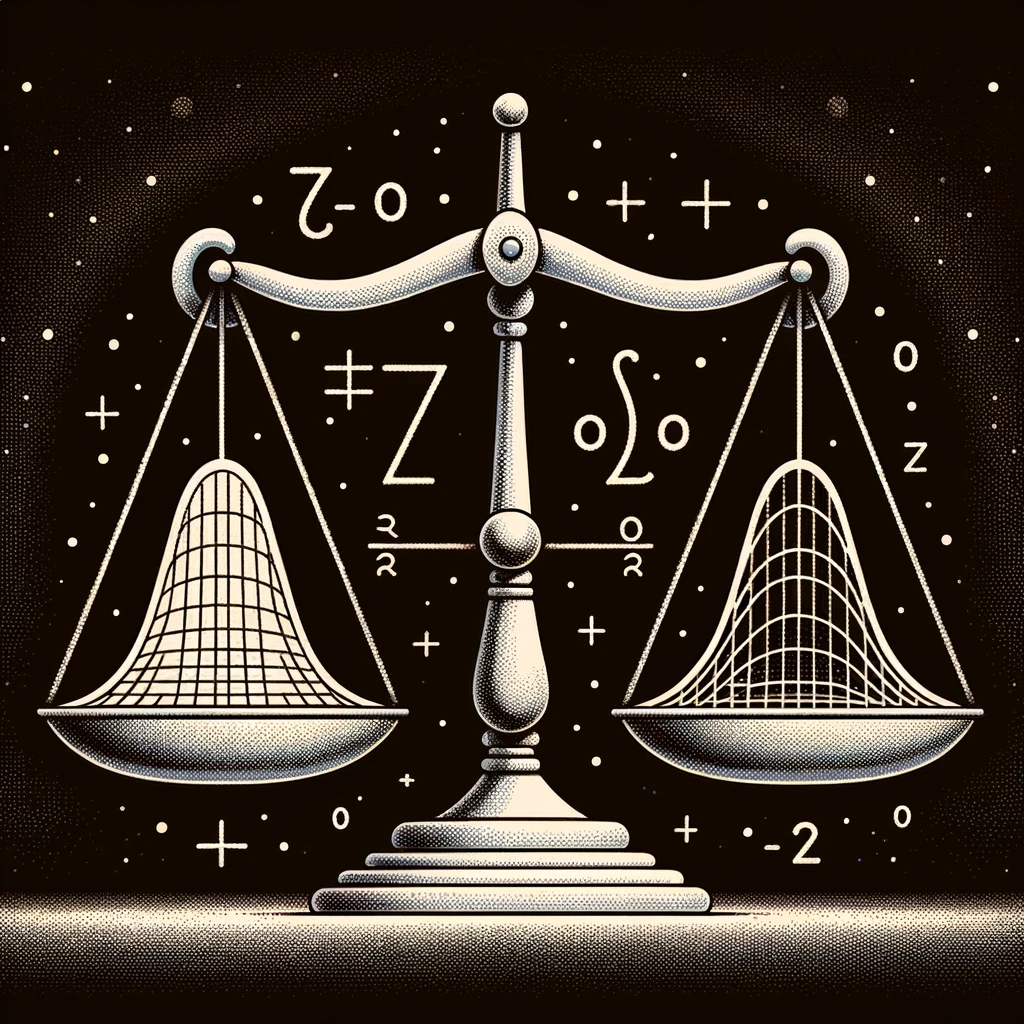
The Hilbert Problems are a set of 23 mathematical challenges presented by the German mathematician David Hilbert in 1900. Aimed at defining future research directions, these problems span various areas of mathematics. While some were clearly stated, others were more open-ended. Over the decades, a majority of these problems have been resolved, significantly advancing mathematical knowledge. Some led to the establishment of entire new fields of study. Unresolved - as of AE53 - Hilbert problems:

Mathematical Treatment of the Axioms of Physics

Rigorous Foundation of Schubert's Enumerative Calculus

Topology of Algebraic Curves and Surfaces

Analysis of Solutions of Variational Problems

Millenium Problems

dall-e%203%3A%20'generate%20picture%20which%20illustrates%20the%20best%20the%20essence%20of%20%22riemann%20hypothesis%22'

dall-e 3: 'generate picture which illustrates the best the essence of "riemann hypothesis"'
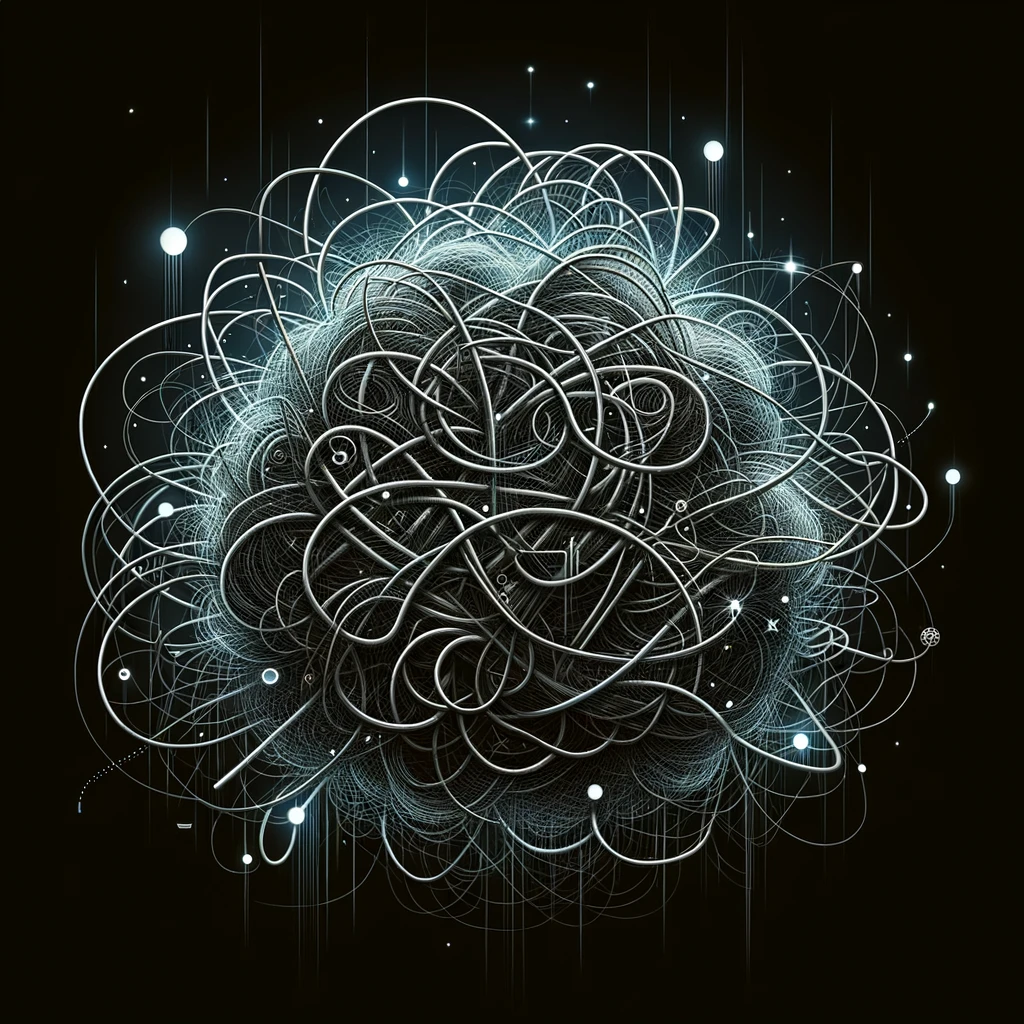
The Millennium Problems are seven mathematical challenges established by the Clay Mathematics Institute in 2000, each with a prize of one million dollars for a correct solution. These problems represent some of the most persistent and critical unsolved issues in mathematics, spanning areas such as number theory, geometry, analysis, and fluid dynamics. Only one of the problems, the Poincaré Conjecture, has been solved so far. Unresolved - as of AE53 - ones are:

Birch and Swinnerton-Dyer Conjecture

Hodge Conjecture

Navier–Stokes Existence and Smoothness

P vs NP Problem

Riemann Hypothesis

Yang–Mills Existence and Mass Gap

wicked problems

dall-e%203%3A%20%22essence%20of%20wicked%20problem%2C%20black%20background%22

dall-e 3: "essence of wicked problem, black background"
No Definitive Formulation

No Stopping Rule

Solutions Are Not True-or-False

No Immediate and No Ultimate Test

Every Solution is a 'One-Shot Operation'

No Enumerable (or Exhaustively Describable) Set of Potential Solutions

Every Wicked Problem is Essentially Unique

Every Wicked Problem Can Be Considered to Be a Symptom of Another Problem

The Existence of a Discrepancy Representing a Wicked Problem Can Be Explained in Numerous Ways

The Planner Has No Right to Be Wrong

13 teacher-proposed D&C problems

This is the set of problem(s) to which I expose all my D&C students since AE50.

Hopefully, at least 1 will be "solved" during my lifetime, 2 during Your lifetime and 3 during lifetime of my children.

10 student-proposed D&C problems

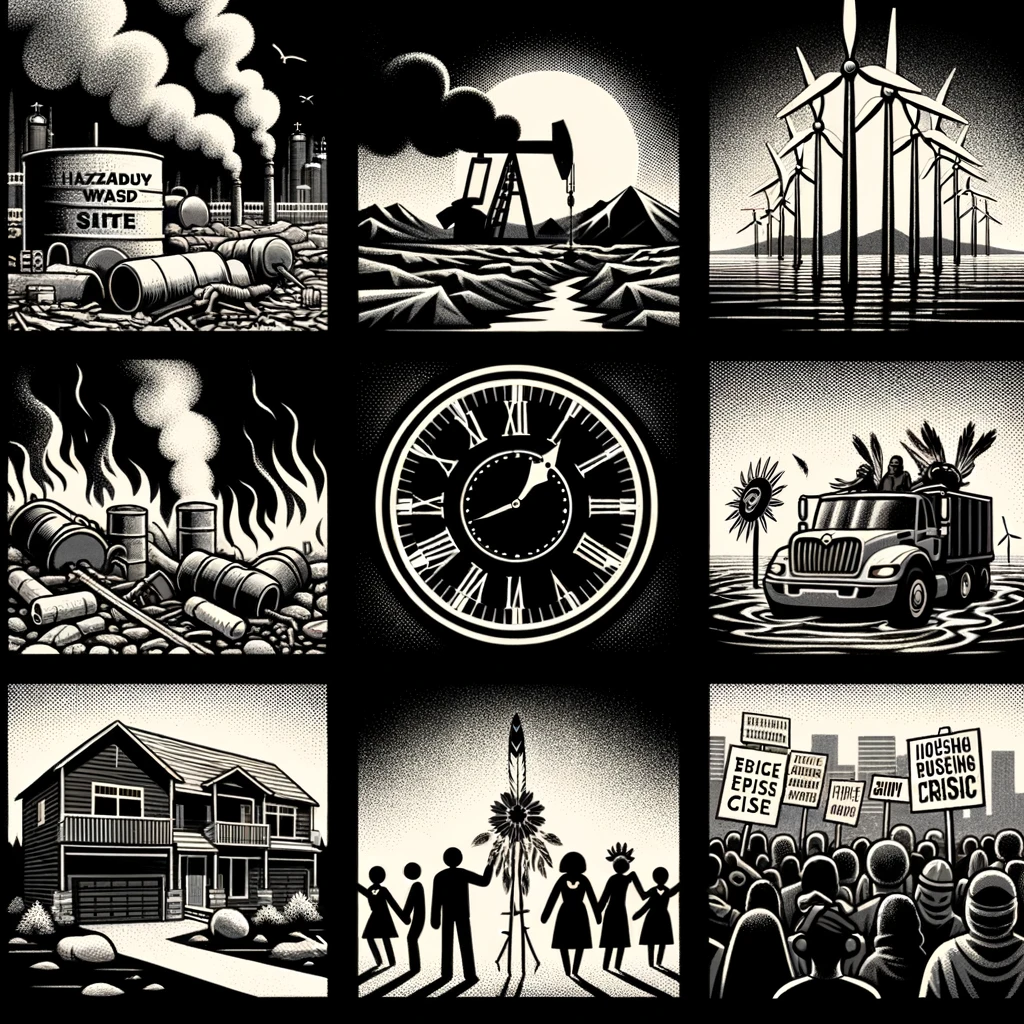
picture%20showing%20depictions%20of%20these%20problems%20%22Radioactive%20waste%20disposal%22%2C%20%22Liberation%20from%20fossil%20fuel%20dependency%22%2C%20%22Language%20extinction%22%2C%20%22Weltverst%C3%A4ndlichmachung%22%2C%22unf*cking%20the%20wohnnungsmarkt%22%2C%20%22the%20clock%20reform%22%20in%20different%20segments%20of%20the%20picture%2C%20black%20background

picture showing depictions of these problems "Radioactive waste disposal", "Liberation from fossil fuel dependency", "Language extinction", "Weltverständlichmachung","unf*cking the wohnnungsmarkt", "the clock reform" in different segments of the picture, black background

Radioactive waste disposal

Liberation from fossil fuel dependency

Language extinction

Weltverständlichmachung

Unf*cking the Wohnungsmarkt

...

...

...

...

The Clock Reform

Taxonomy of Problems


solved

P is considered to be SOLVED if we know that it doesn't have a solution and/or know at least one solution which satisfies our needs.

unsolved

picture%20of%20%22problem%20about%20which%20it%20is%20impossible%20to%20find%20out%20if%20it%20can%20be%20solved%20or%20not%22%2C%20black%20background

picture of "problem about which it is impossible to find out if it can be solved or not", black background
Unsolved problems are problems for which we neither have a solution, nor know whether such solution can be found.

solution(s)


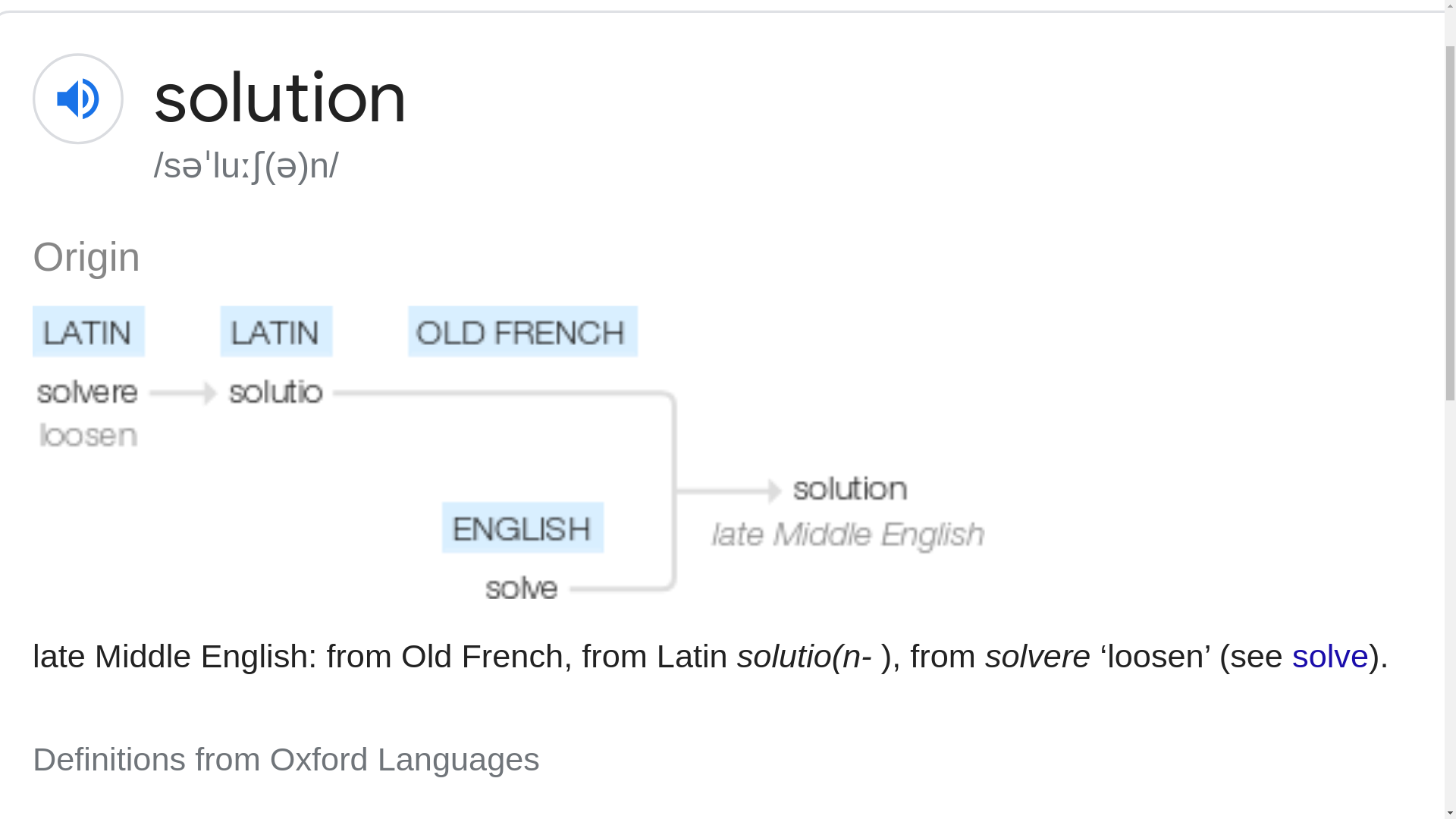
etymology of the term 'solution'

The word "solution" has its roots in Latin, deriving from the word “solutio.” The etymology can be broken down as follows:
  • Latin "solutio": Meaning a loosening or unbinding. This comes from the verb “solvere,” which means to loosen, untie, or dissolve.
  • Latin "solvēre": This is a compound of “sol-,” a variant of “se-” (apart), and “luere” (to wash or to loosen).
Over time, the meaning of "solution" has evolved and broadened. In English, it has been used since the 14th century to refer not just to the act of dissolving a substance in a liquid, but also to the means of solving a problem or answering a question. The sense of finding an answer or explanation encapsulates the idea of resolving a complex situation, untangling its components to reach a clear understanding or resolutionIn summary, the etymology of "solution" reflects a journey from the physical act of loosening or dissolving, through to the more abstract notion of resolving problems and finding answers.

Advice 0

Used as a general rule in chemistry; the old alchemical principle "similia similibus dissolvuntur" meaning "like dissolves like" refers to the ability of polar or non polar solvents to dissolve polar or non polar solutes respectively.

Engineer's solution

In engineering, the solution S is that vector of P which minimizes (resp. maximizes) the value of objective function F.

Exercise 0: Paper Airplane Optimization

After the break, we will make a little exercise in "Paper Airplane Optimization".

What parameters define the "paper airplane design space"

What will be the primary objective ? What could be a secondary, tertiary, etc. objective ?

What other criteria and constraints could be involved in deciding which design is the optimal one ?

Multi-objective Optimization

In multi-objective optimization, optimize for two or more objectives in the same time.

Problem & Solution

In engineering, a problem P is defined by an objective function that needs to be optimized, a vector of parameters that can be adjusted, and constraints that must be satisfied.

The solution S is the optimal set of parameter values that achieve the desired optimization while staying within the bounds of the constraints.

Meta-Problem

What problem is worth time of Your life ?

problem(s)

picture%20of%20%22problem%22%2C%20black%20background

picture of "problem", black background

A problem P can be defined as a situation or scenario where a particular system, device, or process is not performing as desired, leading to suboptimal or undesired outcomes. In a design & engineering context, P is typically framed in terms of:

Vector of Parameters: This is a set of variables or conditions that characterize the system or scenario. They can be input conditions, system states, or any other relevant metrics that describe the system. 

Objective Function: This is a mathematical function that quantifies how far the current system's performance is from the desired performance. The goal is usually to minimize or maximize this function. 

Constraints: These are the bounds or limitations within which the system operates. In engineering problems, constraints can arise from physical limitations, safety requirements, budgetary restrictions, etc. The solution must satisfy these constraints.

Taxonomy of Problems


solution(s)


Exercise 0: Paper Airplane Optimization

After the break, we will make a little exercise in "Paper Airplane Optimization".

What parameters define the "paper airplane design space"

What will be the primary objective ? What could be a secondary, tertiary, etc. objective ?

What other criteria and constraints could be involved in deciding which design is the optimal one ?

Multi-objective Optimization

In multi-objective optimization, optimize for two or more objectives in the same time.

Problem & Solution

In engineering, a problem P is defined by an objective function that needs to be optimized, a vector of parameters that can be adjusted, and constraints that must be satisfied.

The solution S is the optimal set of parameter values that achieve the desired optimization while staying within the bounds of the constraints.